
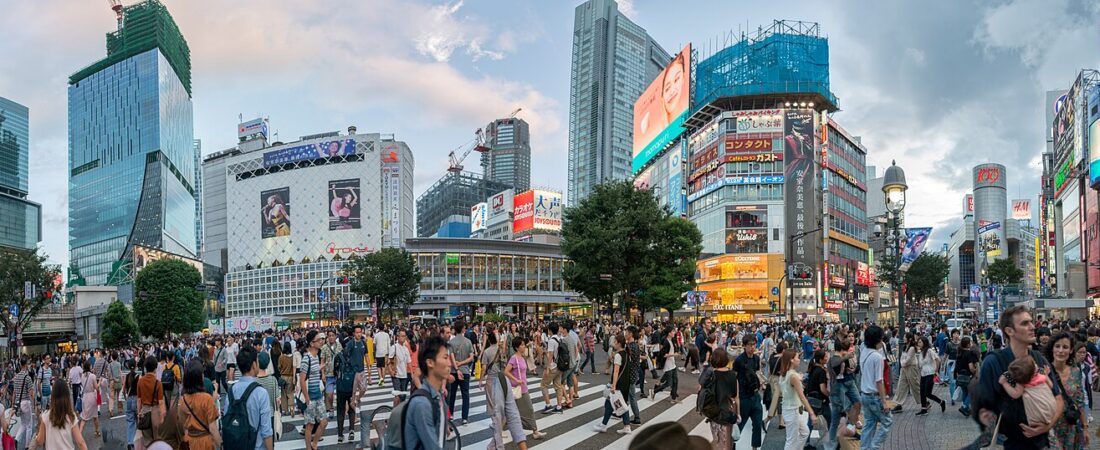
How do you see the Tokyo everyone photographs — and the Tokyo that still feels like a neighbourhood? Start early, book the two timed tickets, and leave one afternoon unplanned.
Cover photo: Shibuya Crossing from street level. Photo: Jorge Láscar / Wikimedia Commons / CC BY 2.0
Map — read this first
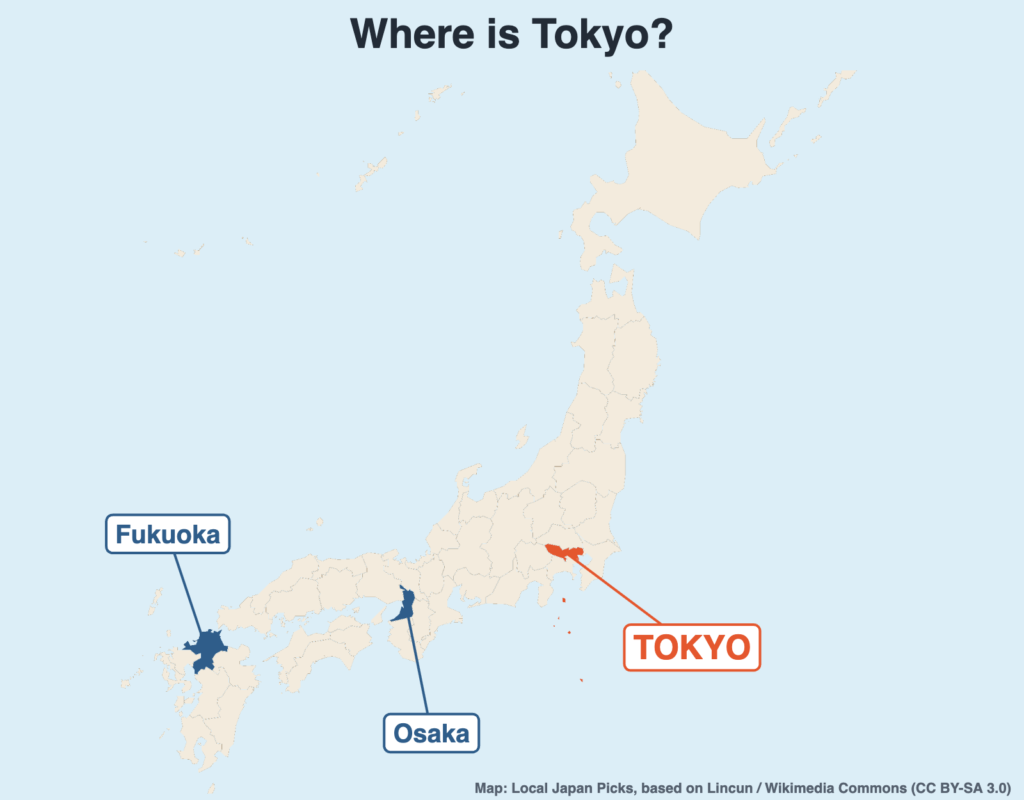
Picture Tokyo as a flat map with the Sumida River on the east edge. Asakusa sits in the north-east, on the river. Shibuya is in the south-west, teamLab Planets and Tsukiji are on the bay to the south-east, and Shinjuku and Harajuku (Meiji Jingu) are in the west-centre. The local places sit in the gaps between them: Yanaka and Nezu in the north-east, Kiyosumi-Shirakawa just east of the centre, Todoroki Valley in the far south-west, and Shimokitazawa and Koenji in the west. You do not need a car. Every place below is a train ride from the next, and the two that need a ticket — Shibuya Sky and teamLab Planets — are the only two you must book in advance.
In short — the 30-second version
- If you have 2–3 days (team-decided plan): Day 1, Asakusa in the early morning, then Kiyosumi-Shirakawa and Yanaka in the afternoon. Day 2, Meiji Jingu in the morning, Shibuya Crossing and Shibuya Sky at sunset. Day 3, teamLab Planets in the morning and Tsukiji for lunch.
- Book now: Shibuya Sky (tickets go on sale 2 weeks ahead; sunset slots sell out) and teamLab Planets (online only).
- Free to walk in: Senso-ji, Shibuya Crossing, Meiji Jingu, Yanaka Ginza, Kiyosumi-Shirakawa, Todoroki Valley, Shimokitazawa and Koenji.
- Money: Carry a ¥10,000–¥20,000 cash buffer (team-decided value, as in our Money in Japan guide). A sample day costs about ¥15,000–¥23,000, not counting flights or hotels (hotel ¥10,000–¥15,000, food ¥4,000–¥6,000, transit ¥1,000–¥2,000 — team-decided values).
- Paying: A regular Suica can be refunded when you leave (minus a ¥220 fee, plus your ¥500 deposit back). Welcome Suica and Tourist PASMO cannot be refunded — do not buy one if you want money back. The 7-day JR Pass costs ¥50,000 on the official site and ¥53,000 through overseas agencies (time-limited price, checked 2026-11-27). For Tokyo alone, you do not need a JR Pass at all.
- Tax-free shopping: Since 1 November 2026, tax-free is no longer a discount at the till. You pay full price in the shop, then claim the refund at the customs terminal before you check in your baggage, with your passport. The minimum is ¥5,000 before tax.
Checklist — before you go
- ☐ Book Shibuya Sky for a sunset slot, 2 weeks ahead, online (cheaper than the counter by ¥300).
- ☐ Book teamLab Planets online — no tickets are sold at the door.
- ☐ Load a regular Suica (not Welcome Suica) if you want a refund at the end.
- ☐ Plan one early morning: Senso-ji at 6:30, or Meiji Jingu at opening.
- ☐ Keep one afternoon unplanned for Yanaka, Kiyosumi-Shirakawa or Shimokitazawa.
The famous 4 — what everyone comes for, and how to do them well
1. Asakusa and Senso-ji — Tokyo’s oldest temple, at 6:30 in the morning
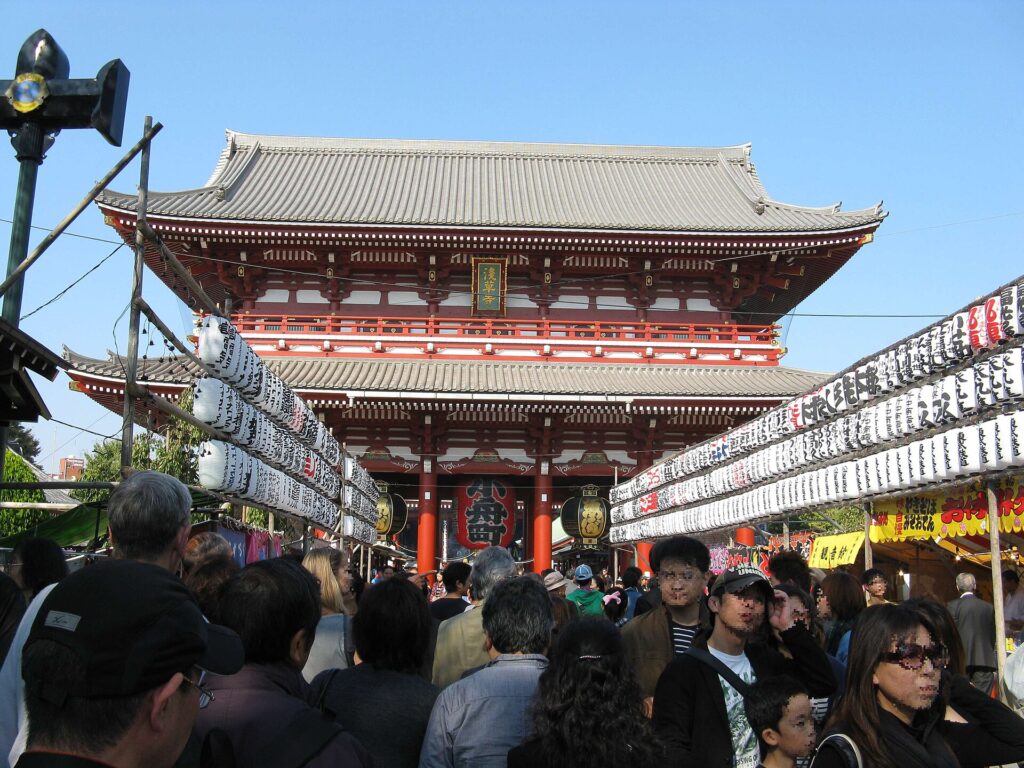
Senso-ji is Tokyo’s oldest temple, and the walk in is half the visit: under the giant red lantern of Kaminarimon (Thunder Gate), up Nakamise shopping street, through Hozomon Gate, and into the courtyard of the Main Hall. The Kannon statue inside is never shown, but the hall, the five-storey pagoda and the incense smoke are the point. Come early. At 6:30 the shopkeepers are still rolling up the shutters and you can stand under the lantern almost alone. By 10:30 Nakamise is solid with people.
Practical — Senso-ji
| Item | Detail |
|---|---|
| Price | Free — no ticket for the grounds, the gates or the Main Hall |
| Time needed | 1–2 hours (team-decided estimate) |
| Nearest station | Asakusa Station |
| Booking | None needed |
| Best time | 6:30–8:00, or after 18:00 when the buildings are lit (until about 23:00) |
| Hours | Main Hall 6:00–17:00 (6:30 from October to March); grounds open 24 hours |
2. Shibuya Crossing and Shibuya Sky — the crossing from the street, then from 229 metres up
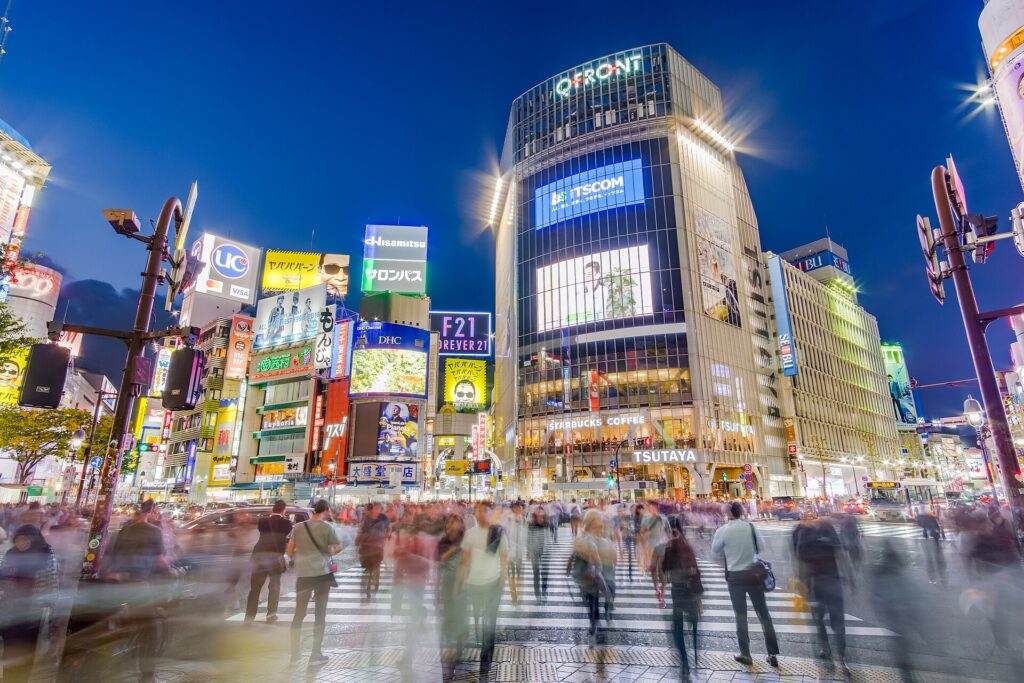
Stand in the crossing once, at street level, and let the light change. Then go up. Shibuya Sky is the open-air rooftop on top of Shibuya Scramble Square, 229 metres above the crossing, with no glass between you and the city. The trick is the ticket: it is a timed entry, sold only two weeks ahead, and the sunset slots are the first to go.
Practical — Shibuya Crossing
| Item | Detail |
|---|---|
| Price | Free to walk the crossing |
| Time needed | 30 minutes (team-decided estimate) |
| Nearest station | Shibuya Station, Hachiko exit |
| Booking | None for the crossing |
| Best time | Dusk, when the signs come on |
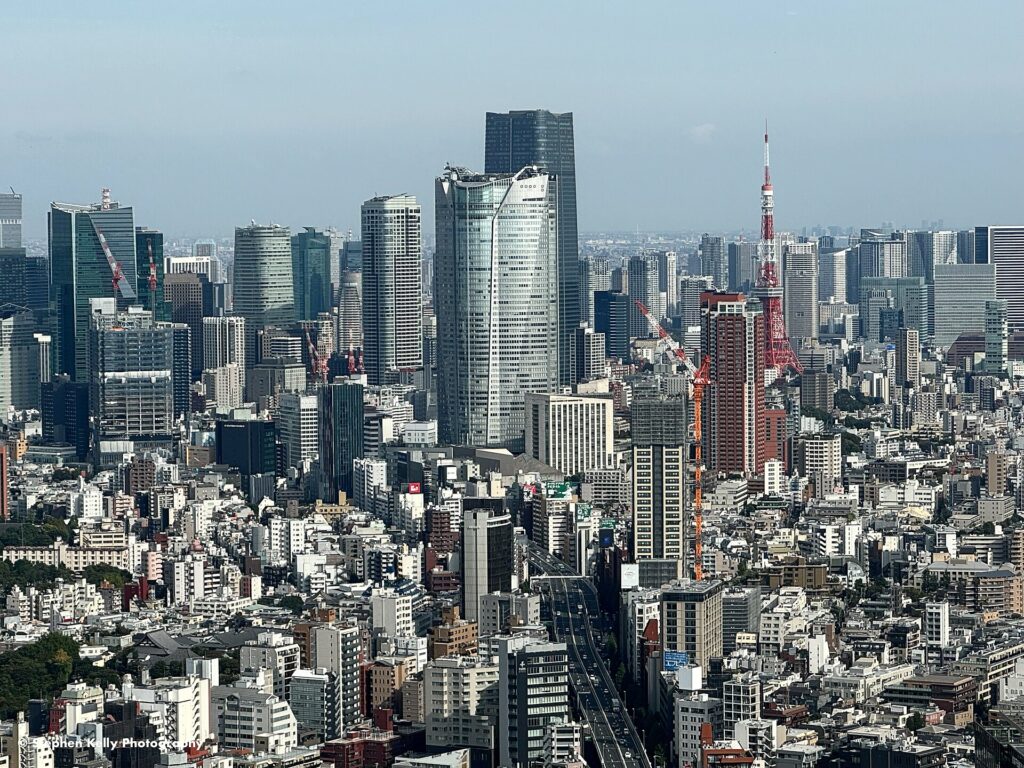
Practical — Shibuya Sky
| Item | Detail |
|---|---|
| Price | Adults (12 and over) online ¥2,700 for entry up to 14:59, ¥3,400 from 15:00. At the counter ¥3,000 / ¥3,700. Elementary-school children (6–12): ¥1,200, at the counter on the day only. Preschoolers: free. Prices checked on the official ticket page on 28 November 2026 — confirm before you book. |
| Time needed | 1–1.5 hours (team-decided estimate) |
| Nearest station | Shibuya Station, direct from Shibuya Scramble Square |
| Booking | Required. Online, 2 weeks ahead. Sunset slots sell out weeks ahead — and if adult tickets sell out online, the counter is sold out too. |
| Best time | A sunset slot (from 15:00 tier) |
3. teamLab Planets Toyosu and Tsukiji Outer Market — barefoot in the water, then lunch standing up
teamLab Planets is a museum you walk through barefoot, partly in knee-deep water, with no map and no fixed route. It is the most physical museum in Tokyo, and it is completely different from teamLab Borderless in Azabudai Hills. Book it online — no tickets are sold at the door, and the price moves by date and time. Afterwards, go to Tsukiji Outer Market for lunch: a working market street of small stalls, best eaten standing up, one stall at a time.
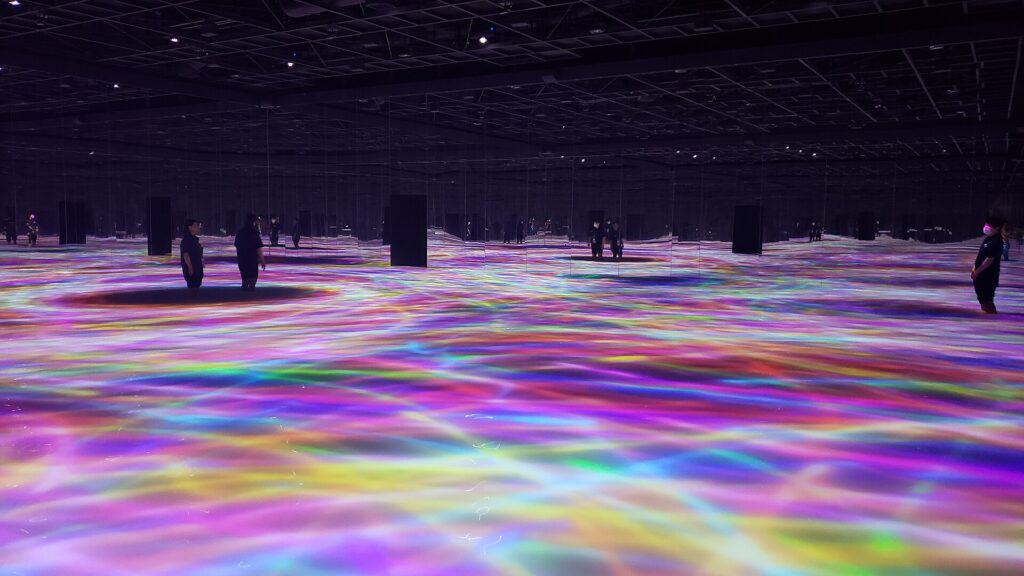
Practical — teamLab Planets
| Item | Detail |
|---|---|
| Price | Adults (18 and over) ¥3,800; junior high / high school ¥2,800; children 4–12 ¥1,500; 3 and under free. Dynamic pricing — the price can change by date and slot. Prices checked on the official site on 28 November 2026. |
| Time needed | 2 hours (team-decided estimate) |
| Nearest station | Toyosu area (teamLab Planets, Toyosu) |
| Booking | Required, online only. No tickets at the door. |
| Best time | A morning slot, then Tsukiji for lunch |
| Hours | 8:00–22:00, last entry 21:00 (31 December – 2 January: 8:00–20:30). Closed 3 December 2026, 14 January and 4 February 2027. Runs until the end of 2027. |
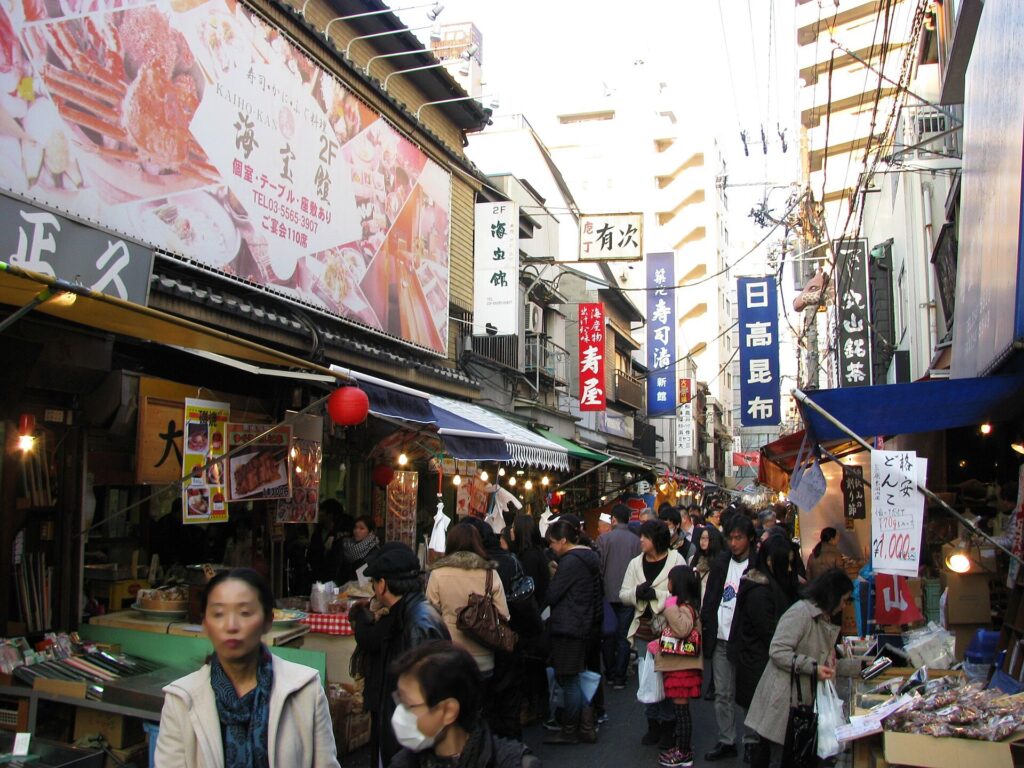
Practical — Tsukiji Outer Market
| Item | Detail |
|---|---|
| Price | Free to walk; food is paid per stall (no fixed price is stated here) |
| Time needed | 1–1.5 hours (team-decided estimate) |
| Nearest station | Tsukiji area |
| Booking | None |
| Best time | Morning, for breakfast or an early lunch |
4. Shinjuku and Meiji Jingu — the forest in the middle of the city
Meiji Jingu is the surprise in the middle of Tokyo: a Shinto shrine in a man-made forest of about 100,000 trees, a minute from Harajuku Station, and completely free. The walk in under the giant torii, through the trees, is the quietest hour you will spend in Tokyo. Go in the morning, before the day heats up, then walk south into Harajuku or west into Shinjuku for the evening.
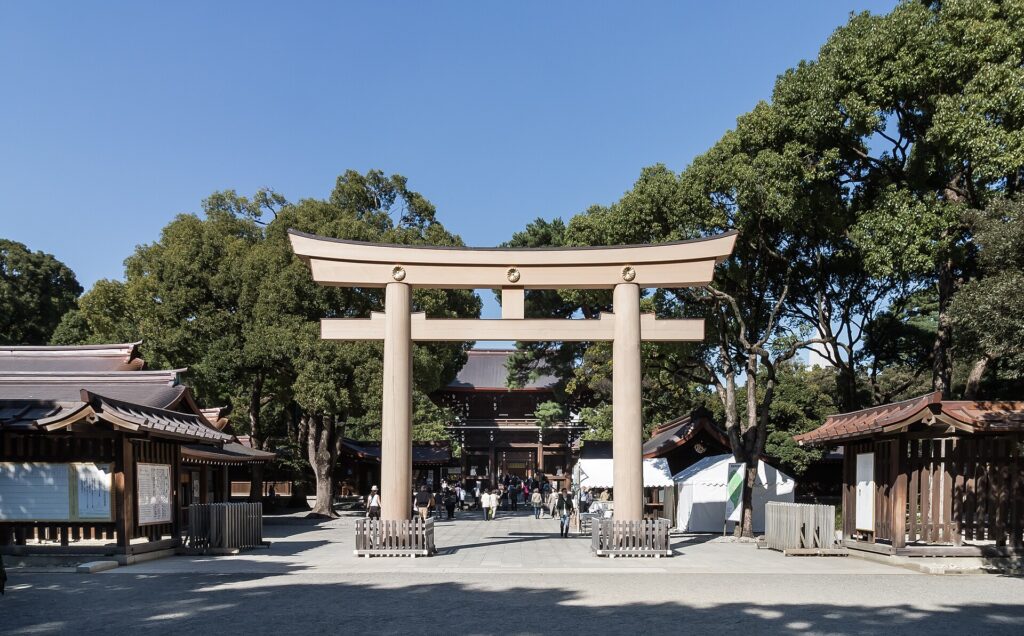
Practical — Meiji Jingu
| Item | Detail |
|---|---|
| Price | Free. Inner Garden ¥500; Meiji Jingu Museum ¥1,000 for adults. |
| Time needed | About 1 hour for the shrine, about 2 hours with the Inner Garden and Museum (team-decided estimate) |
| Nearest station | Harajuku Station (JR Yamanote Line) or Meiji-jingumae Station — 1 minute on foot |
| Booking | None |
| Best time | Morning. Hours follow sunrise to sunset (in November, 6:10–16:10). |
The local 4 — where Tokyo still feels like a neighbourhood
5. Yanaka, Nezu and Sendagi — Yanaka Ginza and Nezu Shrine
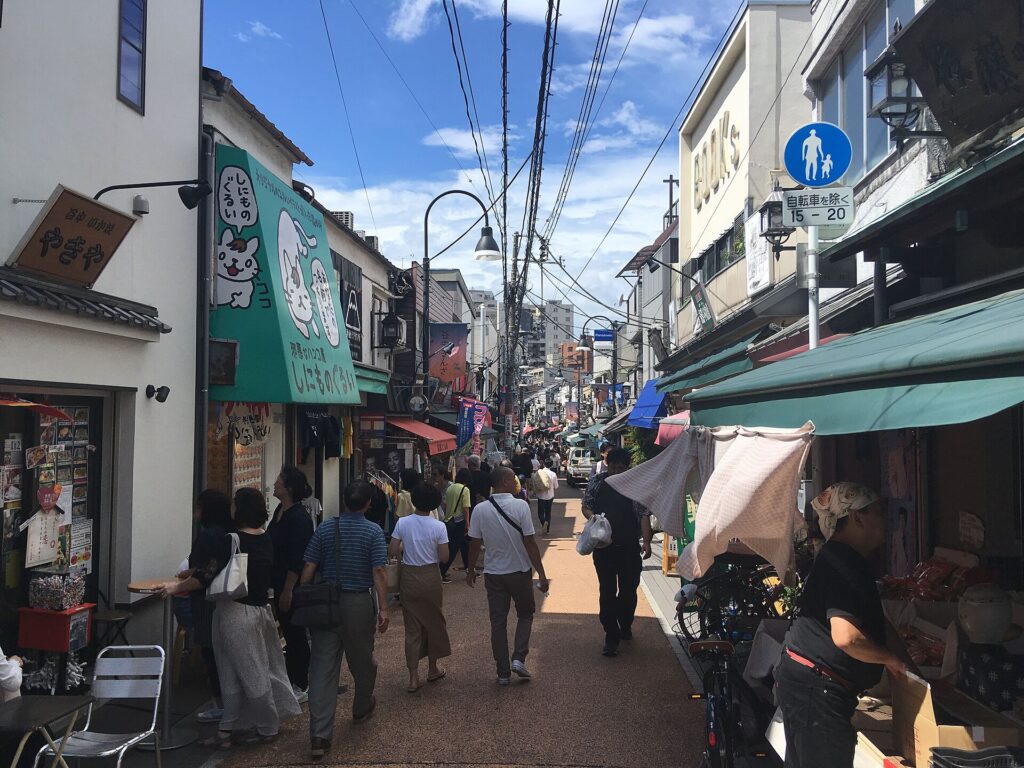
Yanaka survived the war and the redevelopment, and it still feels like a low, wooden, lived-in Tokyo: a shopping street (Yanaka Ginza) of small food shops, cats on the steps, and Nezu Shrine with its azalea garden and small vermilion torii. Walk it slowly. Nothing here needs a ticket, and that is the point.
Practical
| Item | Detail |
|---|---|
| Price | Free to walk; Nezu Shrine grounds free |
| Time needed | 2–3 hours (team-decided estimate) |
| Nearest station | Nippori / Nezu area |
| Booking | None |
| Best time | Late morning, when the shops are open and the streets are still quiet |
6. Kiyosumi-Shirakawa — coffee, canals and a garden
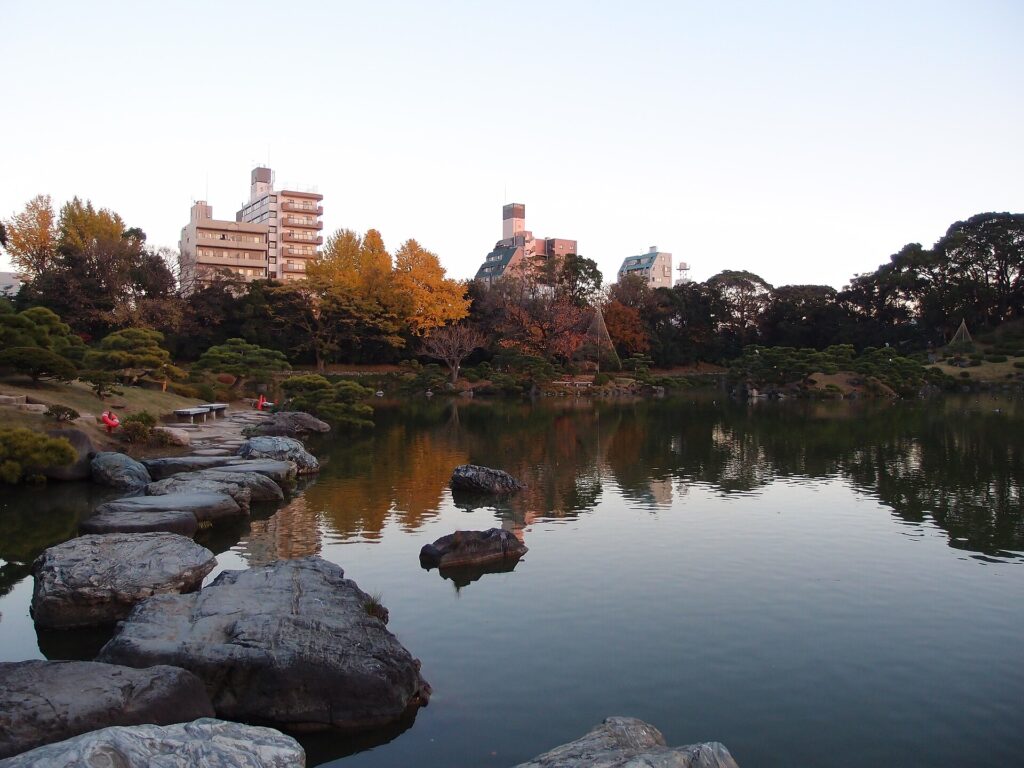
East of the centre, Kiyosumi-Shirakawa is Tokyo’s coffee neighbourhood: old warehouses turned into roasteries, a canal to walk along, and Kiyosumi Gardens for a quiet hour. It is the easiest local afternoon in Tokyo — no queue, no ticket, just a walk and a coffee.
Practical
| Item | Detail |
|---|---|
| Price | Free to walk the streets and canal |
| Time needed | 2 hours (team-decided estimate) |
| Nearest station | Kiyosumi-shirakawa Station |
| Booking | None |
| Best time | Afternoon |
7. Todoroki Valley — a valley in the city
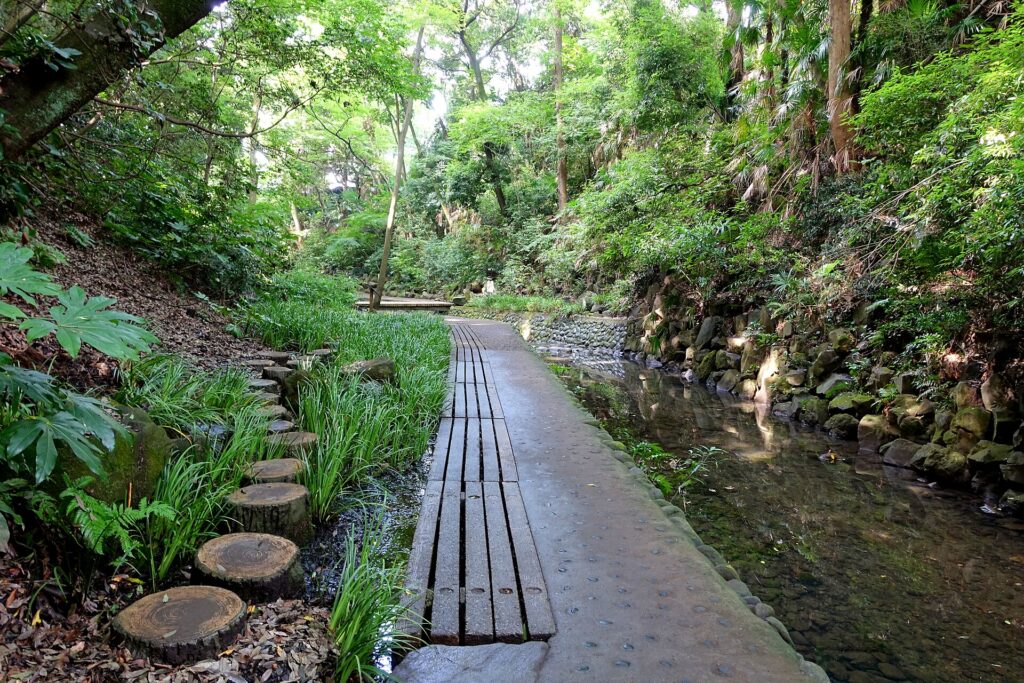
Todoroki Valley is a green ravine in Setagaya, in the far south-west of the city: a stream, a bamboo grove and a shrine, ten minutes from a station and a world away from the crossing. It is the local answer to Shibuya Sky — the same green and quiet, with no queue at all.
Practical
| Item | Detail |
|---|---|
| Price | Free (public valley) |
| Time needed | 1–1.5 hours (team-decided estimate) |
| Nearest station | Todoroki Station area |
| Booking | None |
| Best time | Morning or late afternoon |
8. Shimokitazawa and Koenji — second-hand shops and live music
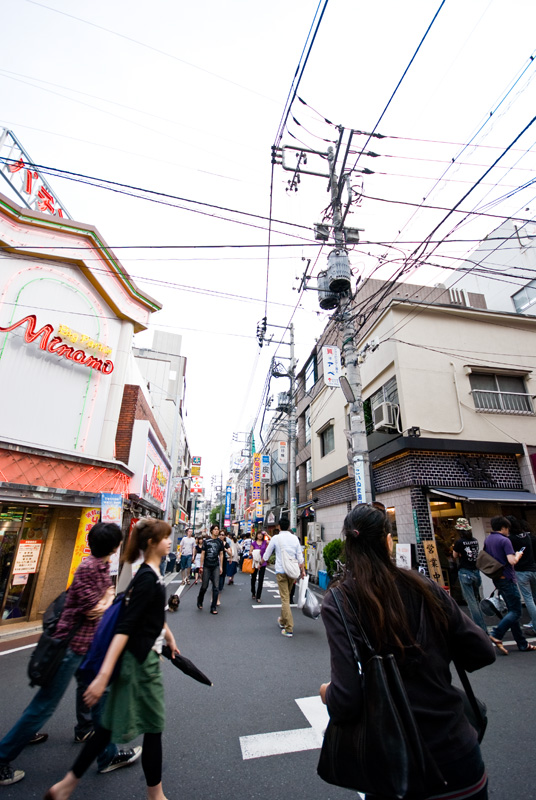
West Tokyo’s two vintage neighbourhoods: Shimokitazawa for second-hand clothes, small theatres and cafes, Koenji for record shops, old shopping streets and live houses. Come with no plan, and leave with something you did not expect.
Practical
| Item | Detail |
|---|---|
| Price | Free to walk; shops and venues are paid individually |
| Time needed | 2–3 hours (team-decided estimate) |
| Nearest station | Shimokitazawa Station / Koenji Station |
| Booking | None |
| Best time | Afternoon into the evening |
How much does Tokyo cost? — a table, not a guess
| Item | Team-decided value |
|---|---|
| Hotel | ¥10,000–¥15,000 / night |
| Food | ¥4,000–¥6,000 / day |
| Transit | ¥1,000–¥2,000 / day |
| Total | About ¥15,000–¥23,000 / day, not counting flights |
| Cash buffer | ¥10,000–¥20,000 |
Where to stay — the short version
Stay near a Yamanote Line station: Shinjuku, Shibuya or Asakusa for a first trip. The line is a loop, so anywhere on it is one train from everywhere else. No hotel price is stated here — hotel prices were unconfirmed at drafting time.
Next in this series
- Oita Like a Local (published) — Beppu, Yufuin and the hot spring towns I grew up with.
- Nagano Beyond the Ski Slopes (published) — Karuizawa, Matsumoto, Ueda and Zenkoji, 80 minutes from Tokyo.
- Kyoto Like a Local (next in this series) — Fushimi Inari at dawn, Kiyomizu-dera at 6 a.m., and the sake streets of Fushimi.
- How to Pay in Japan (published) — Wise, credit cards, Suica and cash.
- Cash, ATMs and the New Tax-Free Rules: Money in Japan, Answered (2026) (published).
Prices and hours in this guide were checked on 2026-11-28. Prices change — confirm on the official page before you go. Cherry blossom: the Japan Meteorological Agency has not issued a cherry-blossom forecast since 2010. The Japan Meteorological Association’s first 2027 forecast is expected in mid-to-late December 2026; any dates before that are averages, not a forecast.
Drafted with AI help; facts checked by me.