
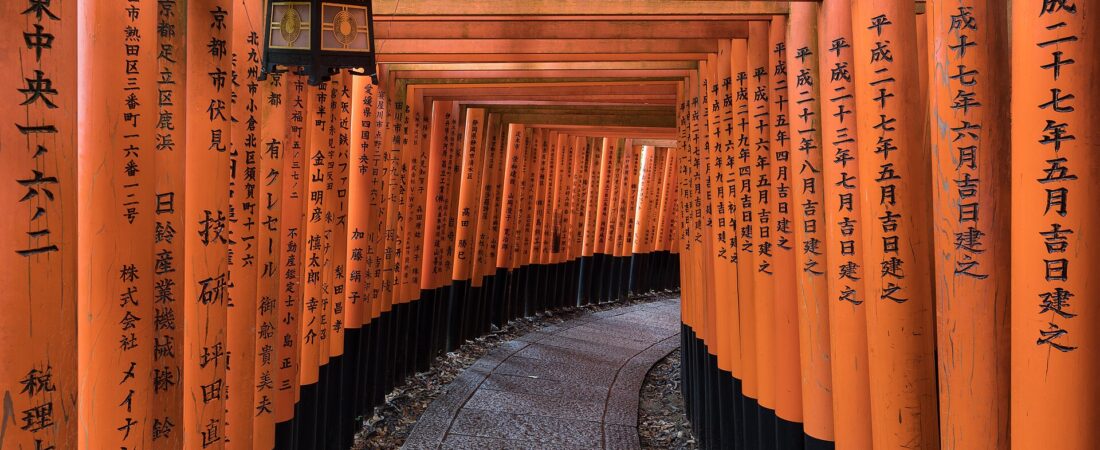
Is Kyoto too crowded? Only if you go at 10 a.m. Go at 6 a.m. and 7 a.m. instead — and spend the afternoon where the crowds never go.
By Kenny — Local Japan Picks
Map — read this first
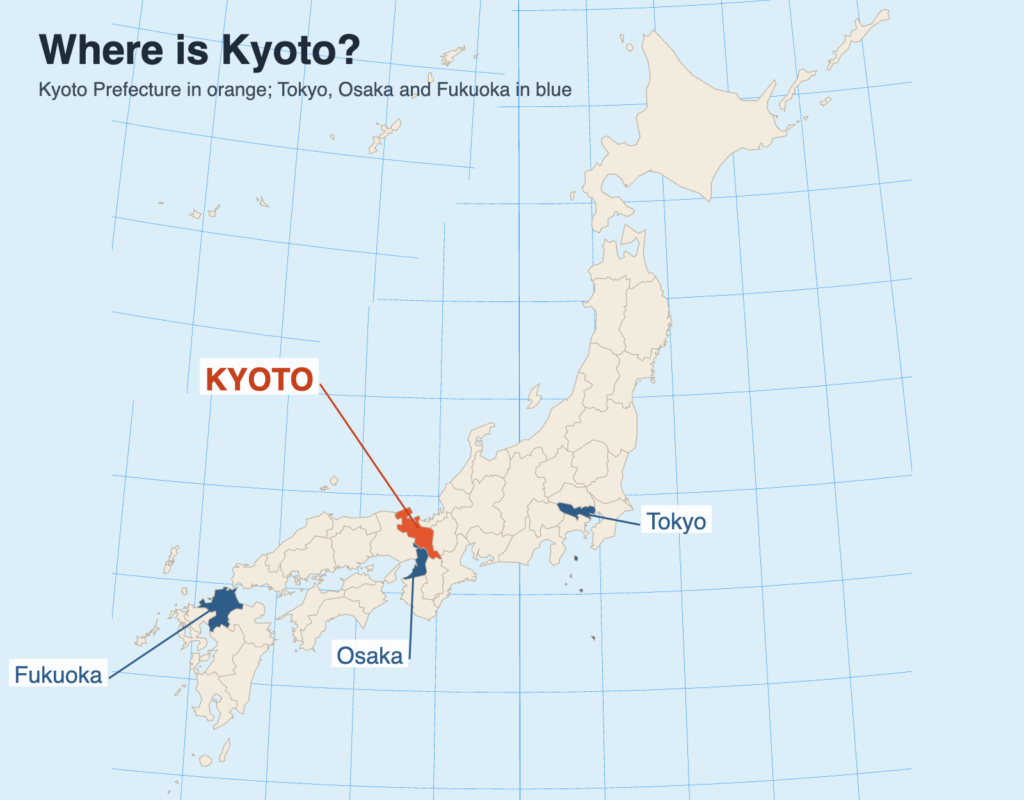
Picture Kyoto as a basin with hills on three sides. Fushimi Inari is in the south. Kiyomizu-dera and Gion are on the eastern hills. Arashiyama and the Bamboo Grove are in the far west, and Kinkaku-ji (the Golden Pavilion) is in the north-west. The local places sit between them: the Fushimi sake district is in the south, around Fushimi Inari; Nishijin is in the north-west centre; Ichijoji is in the north-east; and the quiet temple lanes are in the northern hills. Do the east in the early morning, the west in the early morning on another day, and the local places in the afternoon.
In short — the 30-second version
- If you have 2–3 days: Day 1, Fushimi Inari at 7:00 (it never closes), then Gion in the evening. Day 2, Arashiyama Bamboo Grove before 8:00, Tenryu-ji garden at 8:30, Kinkaku-ji after lunch. Day 3, Kiyomizu-dera at 6:00, then the Fushimi sake district, Nishijin and Ichijoji in the afternoon.
- The crowd rule: Fushimi Inari and Kiyomizu-dera are at their best in the first two hours of the day, and at their worst between 10:00 and 15:00. The Bamboo Grove is the same: before 8:00 you have it; after 10:00 you are in a moving queue.
- Free to walk in: Fushimi Inari (24 hours), the Bamboo Grove (24 hours), Gion and Hanamikoji, the Fushimi sake streets, Nishijin and Ichijoji.
- Money: Carry a ¥10,000–¥20,000 cash buffer. A sample day costs about ¥15,000–¥23,000, not counting flights (hotel ¥10,000–¥15,000, food ¥4,000–¥6,000, transit ¥1,000–¥2,000 — my estimates).
- Paying: A regular Suica can be refunded when you leave (minus a ¥220 fee, plus your ¥500 deposit back). Welcome Suica and Tourist PASMO cannot be refunded. The 7-day JR Pass costs ¥50,000 on the official site and ¥53,000 through overseas agencies (time-limited price). For Kyoto alone, you do not need a JR Pass — the city bus and subway are cheaper. More in How to Pay in Japan.
- Kyoto lodging tax: Kyoto raised its lodging tax on 1 March 2026. It is added to your hotel bill — check the bill, not the room rate.
- Tax-free shopping: Since 1 November 2026, tax-free is no longer a discount at the till. You pay full price in the shop, then claim the refund at the customs terminal before you check in your baggage, with your passport. The minimum is ¥5,000 before tax.
- Sakura 2027: The Japan Meteorological Agency has not issued a cherry-blossom forecast since 2010. The Japan Meteorological Association’s first 2027 forecast is expected in mid-to-late December 2026. Any 2027 dates you see before that are averages, not a forecast.
Checklist — before you go
- Set an alarm: 6:00 for Kiyomizu-dera, 7:00 for Fushimi Inari, before 8:00 for the Bamboo Grove.
- Load a regular Suica (not Welcome Suica) if you want a refund at the end.
- Bring cash for temple tickets — Kiyomizu-dera and Kinkaku-ji take cash at the gate.
- Plan the local afternoon: Fushimi sake, Nishijin, Ichijoji.
- Do not plan a small, quiet temple as a photo stop. Walk quietly, do not block the path, and leave the small temples alone.
The famous 4 — what everyone comes for, and how to do them well
1. Fushimi Inari Taisha — 10,000 torii, at 7:00, for free
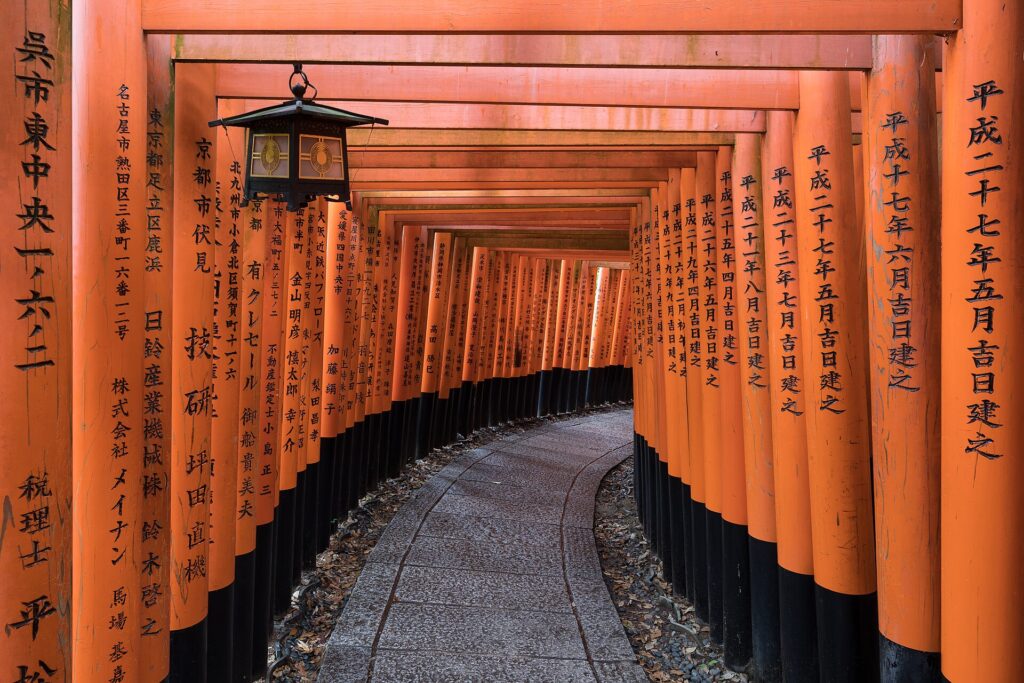
Fushimi Inari is the head shrine of Japan’s roughly 30,000 Inari shrines, founded in 711, and its thousands of vermilion torii gates climb a wooded mountain. It is also the easiest major sight in Kyoto to do well, for three reasons: entry is free, the grounds are open 24 hours, and the station is directly across the street. At 7:00 the tunnels are close to empty and the light through the gates is at its best. By 10:00 the same tunnels are a slow-moving queue. Walk past the first two tunnels — most people turn back there — and the upper trails are empty even in peak season.
Practical — Fushimi Inari Taisha
| Item | Detail |
|---|---|
| Price | Free — no ticket, no gate, no closing time |
| Time needed | 2–3 hours for the full mountain loop; 1 hour for the lower tunnels (estimate) |
| Nearest station | Inari Station (JR Nara Line, about 5 minutes from Kyoto Station) — directly across from the main gate |
| Booking | None — nothing to reserve, ever |
| Best time | 7:00, or at dawn. The grounds are open 24 hours. |
| Hours | Grounds and mountain paths: 24 hours, every day. Amulet counter roughly 9:00–17:00. |
2. Kiyomizu-dera — the stage on the cliff, at 6:00
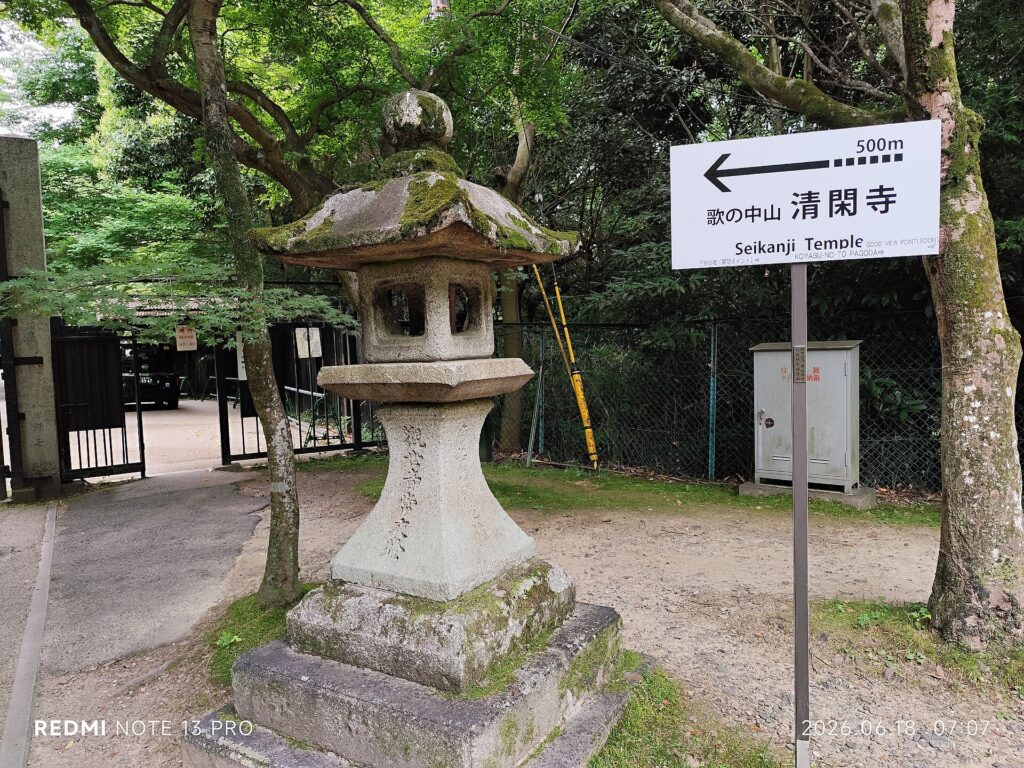
Kiyomizu-dera opens at 6:00 every day of the year, and almost nothing else in Kyoto opens before 8:30. That is the whole trick. The same temple, the same ¥500 ticket, and either a quiet hillside or a queue on the stage. The Main Hall and its wooden stage hang over the city, and the walk down through Sannenzaka and Ninenzaka — the old stone lanes below the temple — is the other half of the visit. Go at 6:00, walk down slowly, and have breakfast in Higashiyama while the tour groups are still arriving.
Practical — Kiyomizu-dera
| Item | Detail |
|---|---|
| Price | Adults ¥500; primary and junior high school pupils ¥200. Cash at the gate. The outer gates, pagoda grounds and lanes below are free. |
| Time needed | About 1 hour inside, plus as long as you like on the lanes below (estimate) |
| Nearest station | Bus to Gojo-zaka, then about 10 minutes uphill on foot |
| Booking | None for individual visitors |
| Best time | 6:00–8:00, before the coaches and school groups |
| Hours | Opens 6:00 every day; closes 18:00 most of the year (21:30 on night-viewing evenings, last entry 21:00) |
3. Arashiyama Bamboo Grove and Kinkaku-ji — the grove before 8:00, the gold after lunch
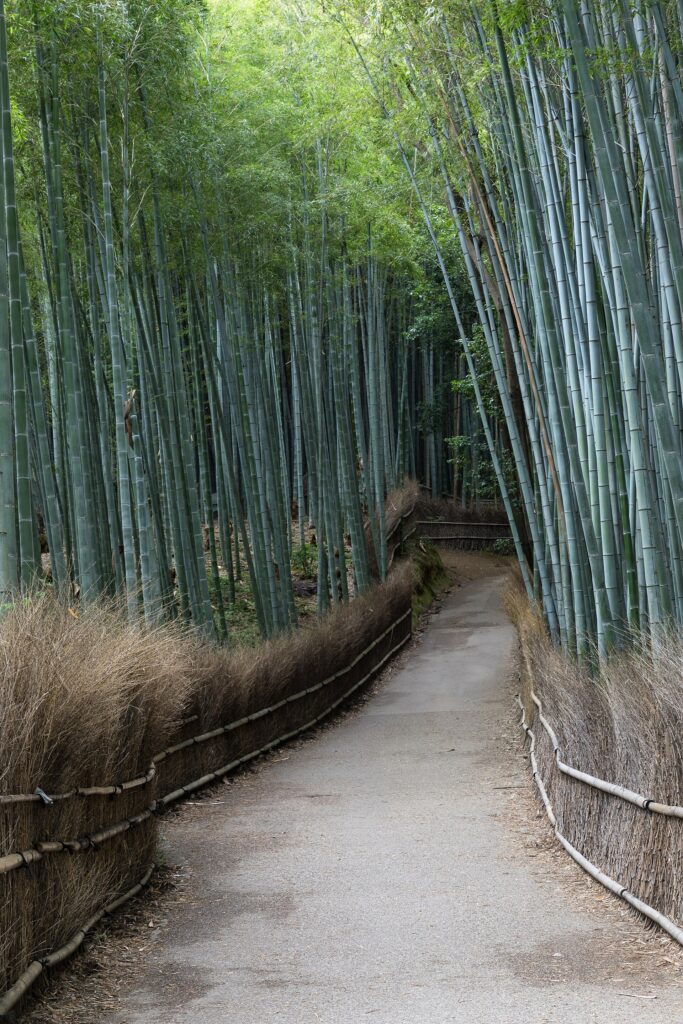
The Bamboo Grove is a public path, about 400 metres long, with no gate and no ticket. That is why the hour matters more here than anywhere else in Kyoto. Before 8:00 you can hear the bamboo knocking in the wind. After 10:00 you walk at the pace of the crowd. Walk the grove first, then enter Tenryu-ji garden when it opens at 8:30, then take the bus to Kinkaku-ji — the Golden Pavilion — after lunch. The pavilion is a three-storey building covered in gold leaf, reflected in its pond, and the visit is a fixed one-way garden walk of under an hour.
Practical — Arashiyama Bamboo Grove
| Item | Detail |
|---|---|
| Price | Free — public path, no gate, no ticket |
| Time needed | 10–30 minutes for the path itself; half a day with Tenryu-ji and the river (estimate) |
| Nearest station | About 10 minutes on foot from Randen Arashiyama Station; about 13 minutes from JR Saga-Arashiyama Station |
| Booking | None |
| Best time | Before 8:00. The path is open 24 hours. Tenryu-ji garden: ¥500, opens 8:30. |
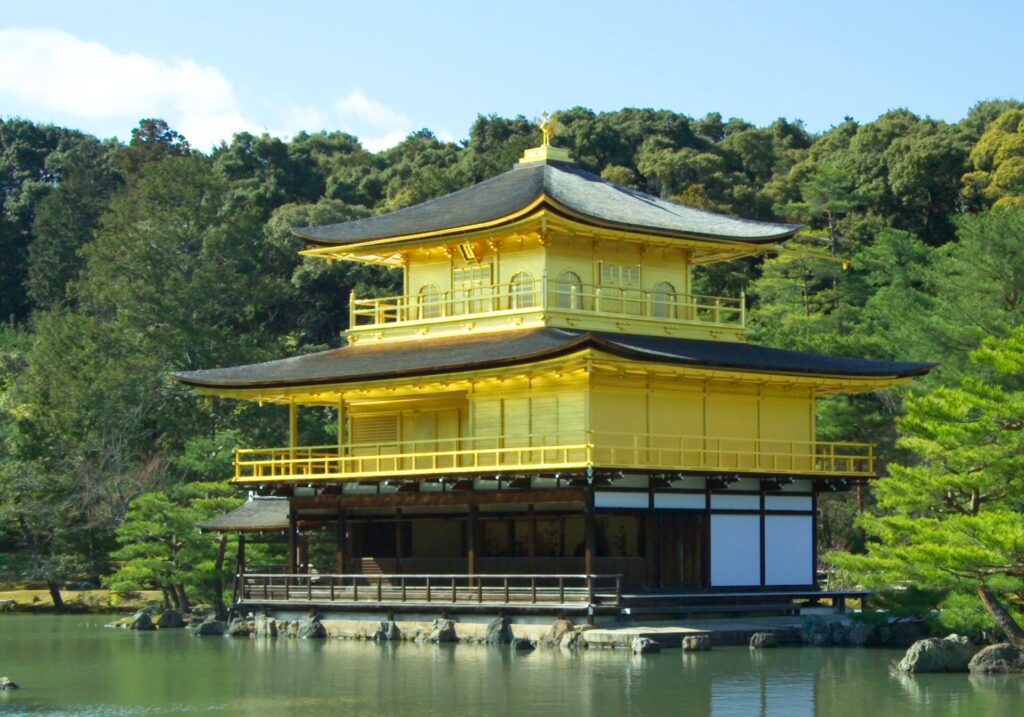
Practical — Kinkaku-ji (Golden Pavilion)
| Item | Detail |
|---|---|
| Price | Adults (high school and above) ¥500; elementary and junior high ¥300. No group discount. |
| Time needed | Under 1 hour (estimate) |
| Nearest station | City bus to Kinkakuji-michi |
| Booking | None |
| Best time | Afternoon, after the Bamboo Grove morning |
| Hours | 9:00–17:00, every day of the year |
4. Gion and Hanamikoji — the evening walk
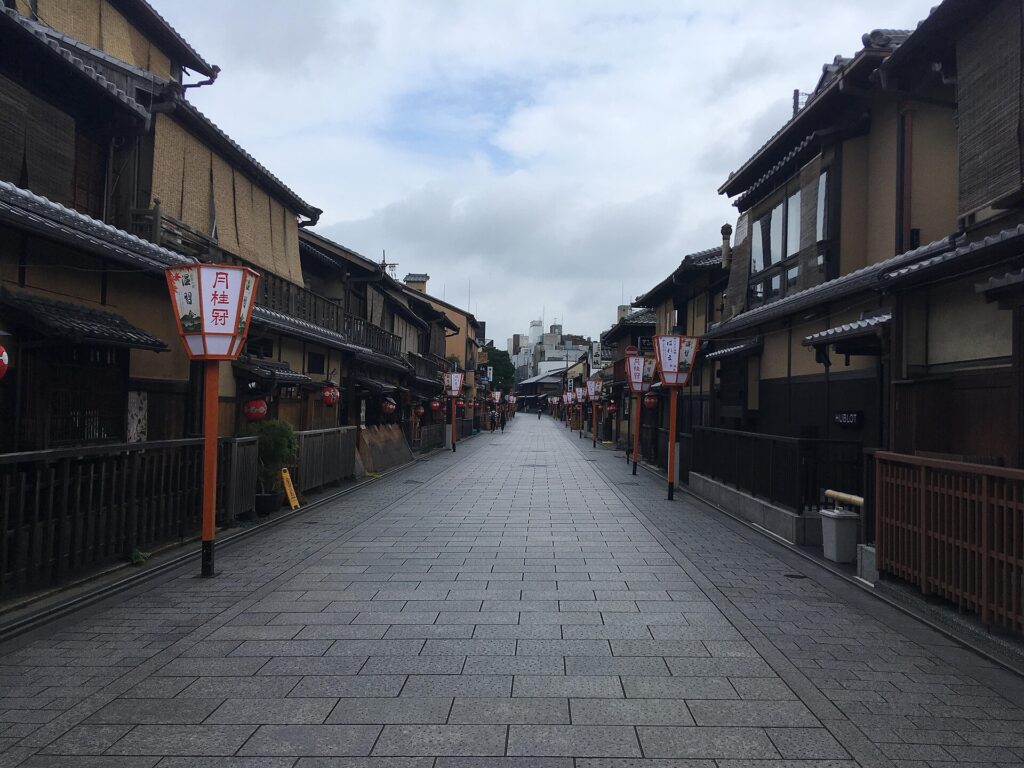
Gion is Kyoto’s old entertainment district, and Hanamikoji is its main street: wooden machiya townhouses, tea houses, and lanterns in the evening. Walk it in the evening, quietly, and do not photograph people. The street is free, the atmosphere is the point, and the rule is simple: you are walking through a neighbourhood where people live and work.
Practical — Gion / Hanamikoji
| Item | Detail |
|---|---|
| Price | Free to walk |
| Time needed | 1–2 hours in the evening (estimate) |
| Nearest station | Gion-Shijo Station area |
| Booking | None |
| Best time | Evening, after the day crowds have gone |
The local 4 — where Kyoto still feels like a neighbourhood
5. Fushimi sake district — the other Fushimi
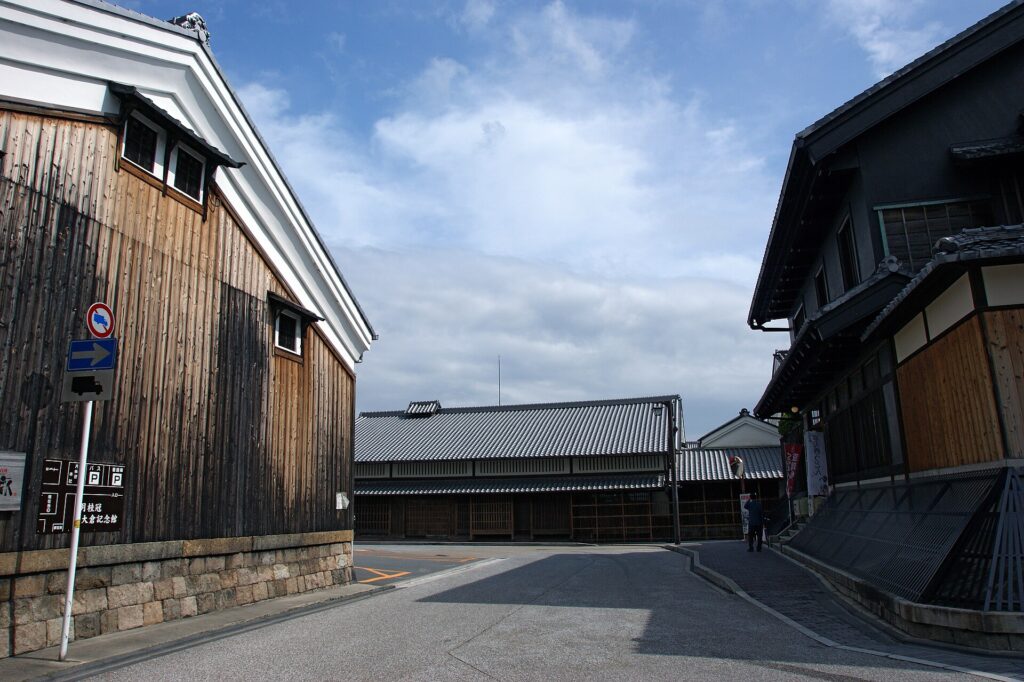
Most visitors go to Fushimi for the torii and leave. Stay, and walk south into the sake district: old breweries, a canal, and tasting rooms where you can try the sake brewed with Fushimi’s soft water. It is the same ward as the shrine, and almost none of the crowd goes there.
Practical — Fushimi sake district
| Item | Detail |
|---|---|
| Price | Free to walk the streets; tastings are paid per brewery (prices vary, so none is stated here) |
| Time needed | 2 hours (estimate) |
| Nearest station | Fushimi area (south Kyoto) |
| Booking | None for the streets |
| Best time | Afternoon |
6. Nishijin — the weaving district
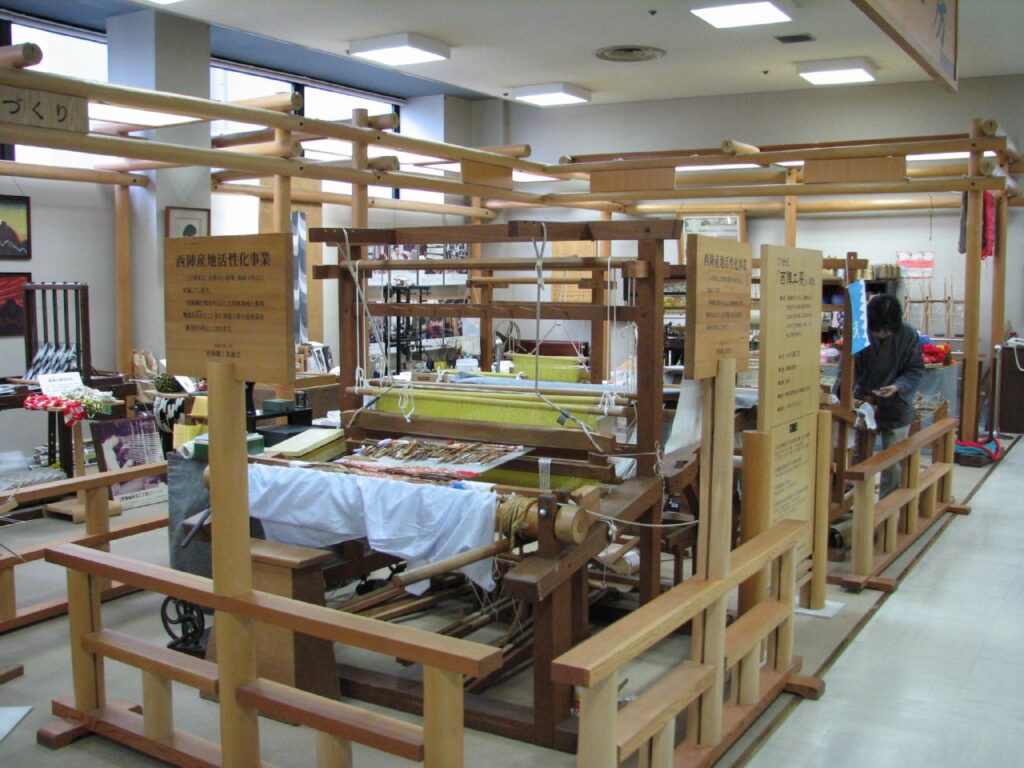
Nishijin, in the north-west centre, is Kyoto’s weaving district: silk workshops, old townhouses, and small shops that have been there for generations. It is not a sight with a ticket. It is a neighbourhood to walk through slowly, and the best thing to do there is to look at the cloth and talk to the people who make it.
Practical — Nishijin
| Item | Detail |
|---|---|
| Price | Free to walk |
| Time needed | 2 hours (estimate) |
| Nearest station | Nishijin area, north-west central Kyoto |
| Booking | None |
| Best time | Afternoon |
7. Ichijoji — ramen and bookshops
Ichijoji, in the north-east, is a student neighbourhood of ramen shops and second-hand bookshops. It is the Kyoto that students actually live in, and the ramen here is the point: small shops, a queue at the door, and a bowl that costs less than a temple ticket. Come hungry.
Practical — Ichijoji
| Item | Detail |
|---|---|
| Price | Free to walk; ramen is paid per shop (prices vary, so none is stated here) |
| Time needed | 2 hours (estimate) |
| Nearest station | Ichijoji area, north-east Kyoto |
| Booking | None |
| Best time | Lunch or early evening |
8. How to walk a quiet temple area — without naming it
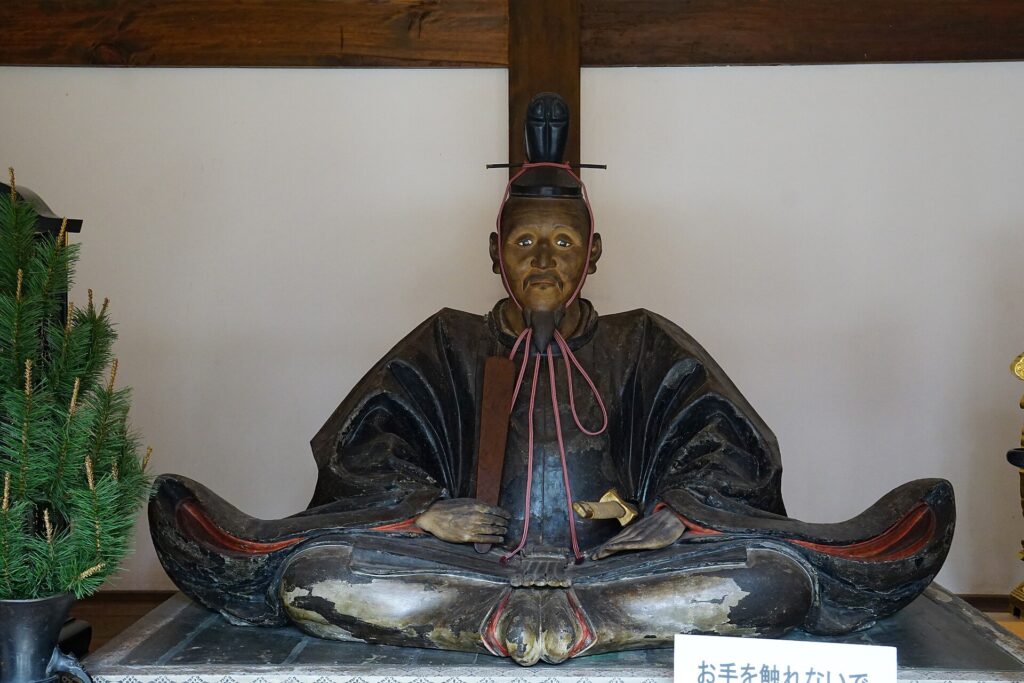
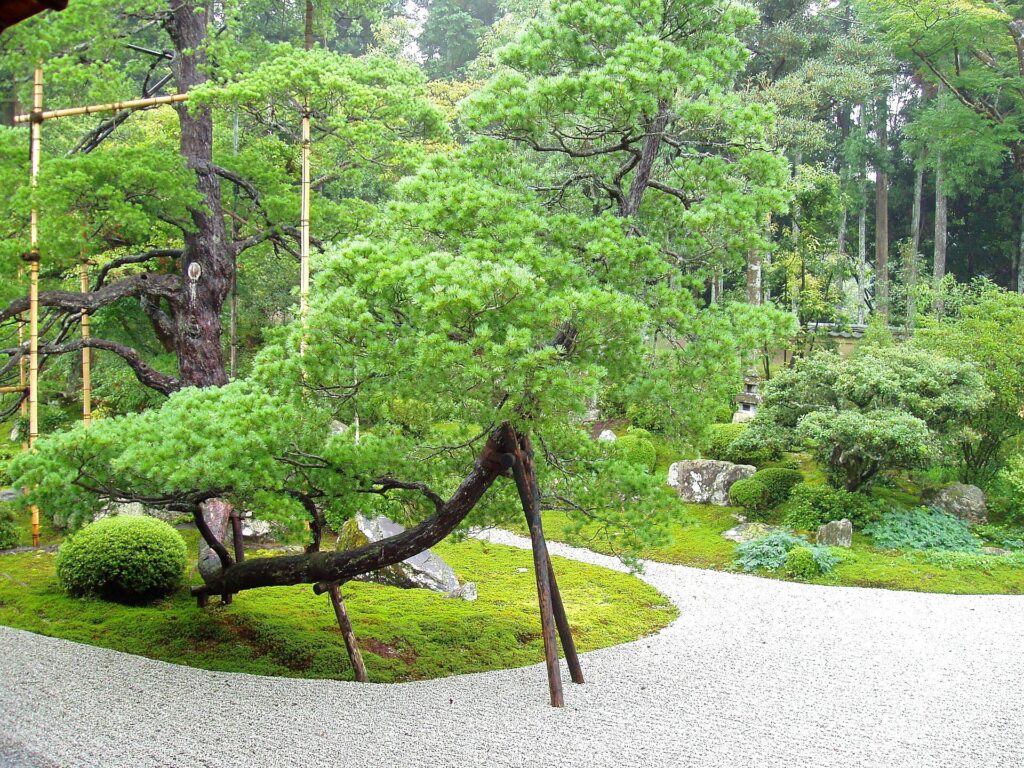
Kyoto has small temple lanes in the northern hills where the point is the quiet itself: moss, stone steps, and almost no one else. This guide does not name them. If you find one, walk quietly, speak softly, do not block the path for a photograph, and do not post the exact location. The locals who asked us not to publicise these places were right — a quiet place stops being quiet the moment it is listed. Treat the quiet as the sight, and leave it alone.
Practical — Quiet temple areas
| Item | Detail |
|---|---|
| Price | Not stated — no specific temple is named |
| Time needed | 1 hour (estimate) |
| Booking | None |
| Best time | Early morning, when no one else is there |
How much does Kyoto cost? — a table, not a guess
| Item | Estimate |
|---|---|
| Hotel | ¥10,000–¥15,000 / night |
| Food | ¥4,000–¥6,000 / day |
| Transit | ¥1,000–¥2,000 / day |
| Total | About ¥15,000–¥23,000 / day, not counting flights |
| Cash buffer | ¥10,000–¥20,000 |
For ATMs, cash and the new tax-free rules, see Cash, ATMs and the New Tax-Free Rules.
Where to stay — the short version
Stay near Kyoto Station for the trains, or in Higashiyama for the early mornings. Kiyomizu-dera opens at 6:00 — if you stay in Higashiyama, you can walk there before breakfast. I don’t name or price specific hotels here, because prices change by season.
Next in this series
- Oita Like a Local — Beppu, Yufuin and the hot spring towns I grew up with.
- Nagano Beyond the Ski Slopes — Karuizawa, Matsumoto, Ueda and Zenkoji, 80 minutes from Tokyo.
- Tokyo Like a Local — the famous 4, and the 4 locals actually go.
- How to Pay in Japan — Wise, credit cards, Suica and cash.
- Cash, ATMs and the New Tax-Free Rules: Money in Japan, Answered (2026)
Prices and hours in this guide were checked on 28 November 2026. Prices change — confirm on the official page before you go.
Drafted with AI help; facts checked by me.